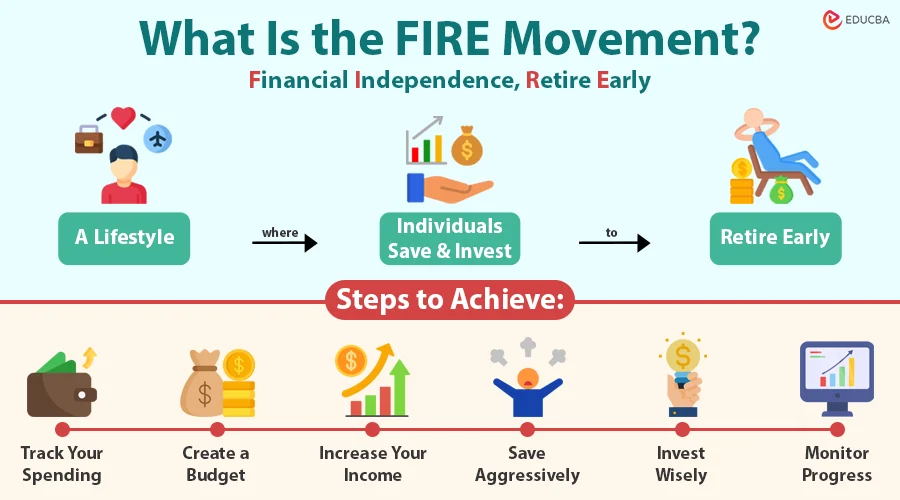
The FIRE Movement (Financial Independence, Retire Early) explains a growing philosophy centered on accumulating enough assets to achieve financial independence decades before traditional retirement age.
What is FIRE?
FIRE stands for Financial Independence, Retire Early.
The basic idea is:
- Save aggressively
- Invest consistently
- Build enough wealth that your investments can cover your living expenses
- Gain the freedom to stop working, work less, or pursue work you enjoy much earlier than age 65.
The Core Formula
Many FIRE followers target:
25× Annual Expenses
Example:
- Annual spending: $60,000
- FIRE target: $1.5 million ($60,000 × 25)
This is based on the well-known “4% Rule,” where a retiree withdraws roughly 4% of their portfolio annually.
Different Types of FIRE
🔥 Lean FIRE
- Minimalist lifestyle
- Lower spending requirements
- Smaller nest egg needed
🔥 Fat FIRE
- More comfortable or luxury lifestyle
- Larger investment portfolio
- Higher spending expectations
🔥 Barista FIRE
- Part-time work supplements investments
- More flexibility and less pressure on savings
🔥 Coast FIRE
- Save aggressively early in life
- Allow investments to compound
- Later only earn enough to cover current expenses rather than continuing aggressive retirement contributions.
Why FIRE Is Popular
People are attracted to:
- More control over their time
- Less dependence on employers
- Greater career flexibility
- Reduced financial stress
- The ability to choose work rather than need work.
Criticisms of FIRE
The movement isn’t without critics:
- Saving 50%–70% of income isn’t realistic for many households.
- Healthcare costs can be challenging before Medicare eligibility.
- Inflation and market downturns can impact plans.
- Some early retirees report struggles with purpose and identity after leaving traditional careers.
That approach often produces the same outcome—financial independence—without requiring the extreme savings rates associated with traditional FIRE. For many higher-income professionals, the goal isn’t necessarily to stop working, but to reach the point where work becomes optional.