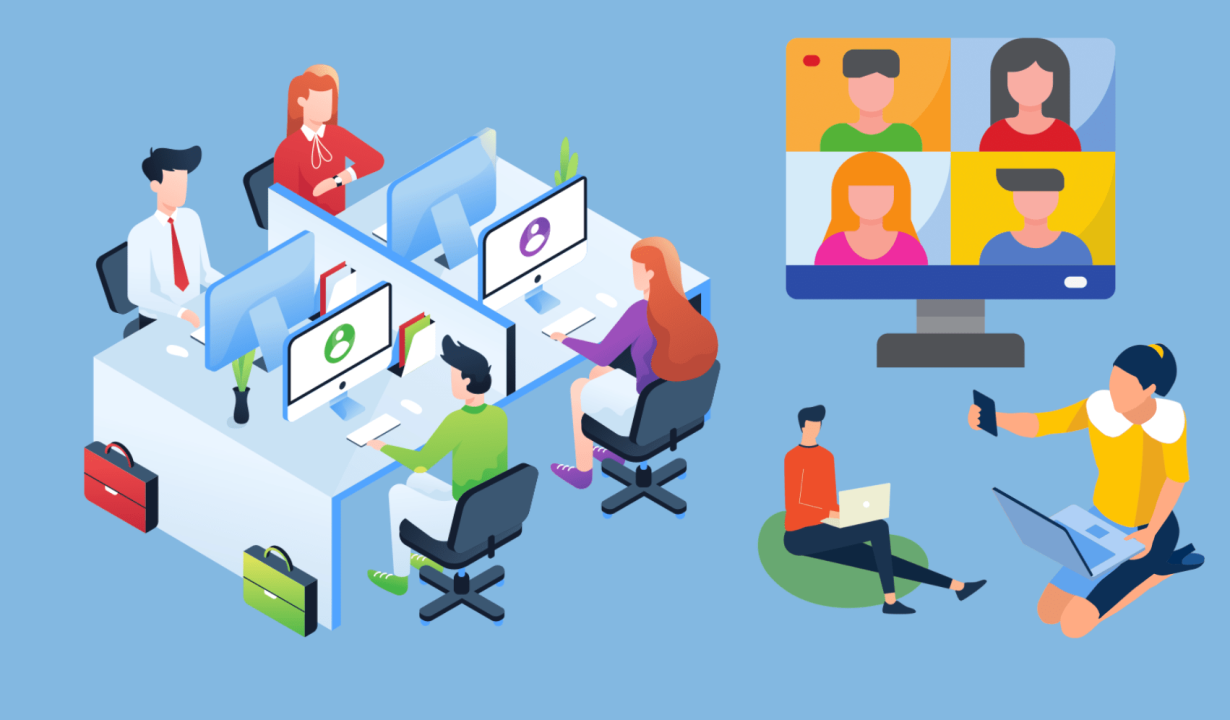
The key statistic is that 35% of U.S. workers worked from home at least some of the time in 2025, compared with 24% before the pandemic.
That suggests remote work isn’t simply a temporary response to COVID-19—it has become a durable feature of the labor market.
For knowledge work, many organizations appear to have settled into a hybrid model rather than fully returning to the office.
Why Education Matters
Remote work is concentrated among workers with college and advanced degrees.
That makes sense because many jobs in:
- IT
- Law
- Finance
- Consulting
- Higher education
- Software development
can be performed effectively from almost anywhere.
By contrast, jobs in:
- Facilities
- Construction
- Healthcare
- Manufacturing
- Landscaping
- Irrigation
Productivity vs. Culture
The debate has shifted.
In 2021, the question was:
“Can people work remotely?”
Today, it’s more often:
“What are we giving up when they do?”
This highlights one concern: reduced social interaction. It cites research suggesting remote work may contribute to declining well-being for some workers over time.
It’s important to interpret that carefully. The study identifies an association and estimates remote work may explain part of a broader mental health trend, but that doesn’t necessarily mean remote work is the sole or direct cause. Individual experiences vary based on job type, workplace culture, personality, and support systems.
My Take
I don’t think the takeaway is that CEOs “lost.”
Rather, the labor market appears to have reached a new equilibrium.
Many organizations have concluded:
- Some work is best done in person.
- Some work is best done remotely.
- The optimal balance depends on the role.
For your own responsibilities, a hybrid approach seems particularly well suited. Strategic planning, budgeting, documentation, and vendor meetings can often be handled remotely, while classroom support, technology deployments, and major campus events clearly benefit from on-site leadership.
That’s likely why hybrid work has remained stable instead of swinging back to either extreme: it gives organizations flexibility while preserving in-person collaboration where it adds the most value.
If anything, the next competitive advantage won’t simply be allowing remote work—it will be designing workplaces that make employees want to come in because the office offers meaningful collaboration, mentoring, and resources that can’t easily be replicated at home.