AI is becoming a required skill across a growing range of professions—not just in technology. New data from Indeed shows that employers are increasingly mentioning AI directly in job titles and descriptions, signaling that AI literacy is becoming a mainstream workplace expectation.
The key trend
Between 2022 and the first quarter of 2026:
- Job titles mentioning AI increased from 264 to 822.
- The share of job titles referencing AI grew from 2.6% to 8.3%.
- About 63% of these AI-related job titles are now outside the technology sector.
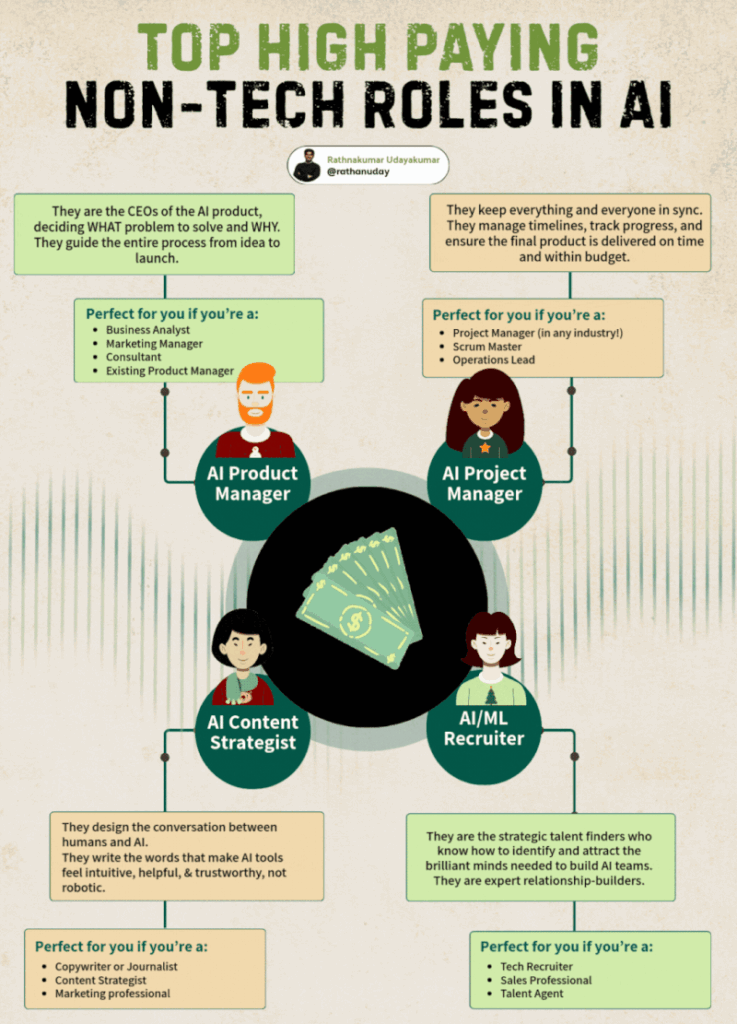
AI is spreading across industries
While software engineering remains a major area for AI hiring, employers are increasingly seeking AI skills in fields such as:
- 📈 Marketing
- 📊 Management
- 🏥 Healthcare
- 🎓 Education
- 🚚 Transportation
- 👥 Human Resources
Examples include roles like:
- AI Project Engineer
- Physical Therapist (AI Documentation)
- AI Autonomous Truck Test Driver
- Electrical Engineer – Battery Systems for AI Data Centers.
AI isn’t replacing every job—it’s changing them
One of the article’s most important conclusions is that many employers are adding AI capabilities to existing jobs rather than replacing workers outright.
Indeed Hiring Lab researcher Pawel Adrjan compares this to the rise of computer literacy decades ago. Today, employers often want professionals who already know their field and can also use AI effectively—not necessarily AI specialists with advanced technical backgrounds.
The bigger picture
The data suggests the labor market is shifting from asking “Can you use AI?” to “Can you use AI effectively in your profession?”
That’s a meaningful distinction. Employers are increasingly looking for professionals who combine domain expertise with AI-assisted workflows rather than expecting AI to replace those professionals entirely. As AI tools become more embedded in everyday work, the competitive advantage may come from knowing how to apply them well within your field.