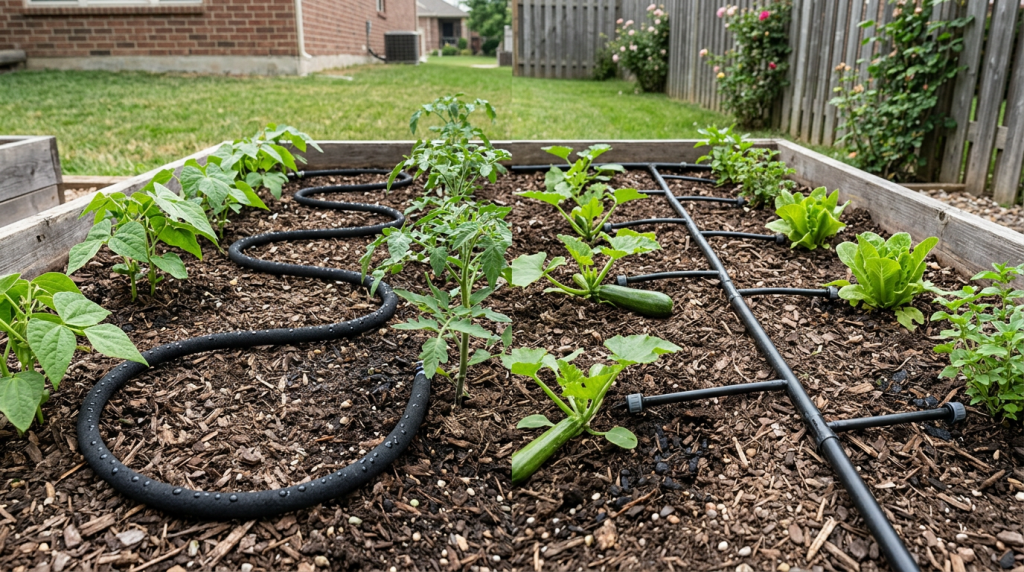
Drip irrigation and soaker lines both deliver water close to plant roots, but they are not interchangeable. The better choice depends on the planting area, water pressure, maintenance needs and the amount of control you want.
How drip irrigation works
Drip systems use tubing and individual emitters or inline dripline to deliver measured water at specific locations. They are well suited to shrubs, trees, foundation beds, vegetable gardens and narrow planting areas.
How soaker lines work
A soaker line releases water gradually along its length. It can be a practical option for closely spaced plantings and simple beds where uniform placement is possible.
Important differences
- Control: Drip emitters provide more precise delivery to individual plants.
- Pressure: Both systems may require pressure regulation for consistent performance.
- Filtration: Drip components benefit from proper filtration to reduce clogging.
- Layout: Long or uneven runs can water inconsistently if they are not designed correctly.
- Maintenance: Lines should be inspected, flushed and protected before winter.
Can they connect to a sprinkler system?
Yes. A dedicated drip or soaker zone can often be added to an existing irrigation system. The design should account for available flow, pressure, valve operation and the different watering needs of lawn and planting zones.
Xtreme Irrigation & Design installs and services drip irrigation and soaker-line systems throughout Nassau County, Queens and western Suffolk. We can evaluate beds, shrubs and foundation plantings and recommend a practical layout.
Call 516-654-1212 or request an estimate online.