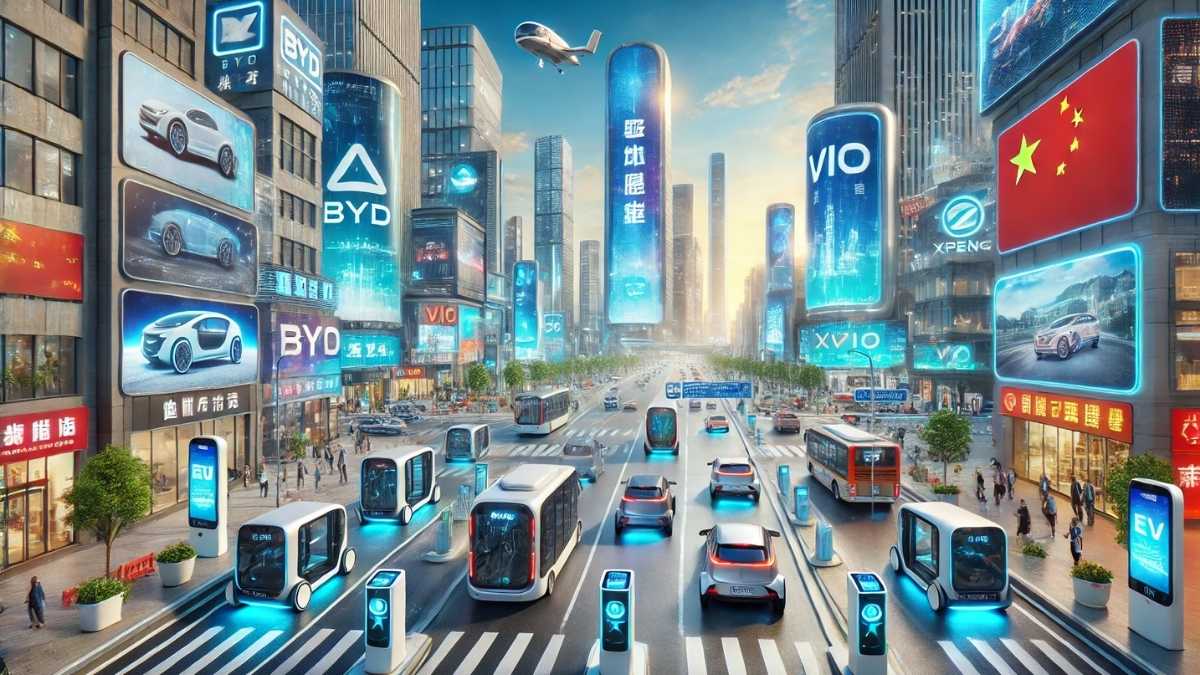
Chinese electric vehicle companies are rapidly becoming dominant players in the global auto market — but they remain largely blocked from the United States due to tariffs, political pressure, and national security concerns.
Chinese automakers such as BYD, Geely, and Xiaomi are producing EVs that are often:
- Far cheaper than Western competitors
- Packed with advanced technology
- Highly competitive in battery performance and charging speed
China now accounts for the majority of global EV production and sales, with Chinese brands aggressively expanding into Europe, Latin America, and other international markets.
However, the U.S. has effectively shut Chinese EVs out of the American market through:
- Heavy tariffs
- Import restrictions
- Proposed bipartisan legislation tied to data security and connected-vehicle concerns
U.S. lawmakers and automakers argue that Chinese smart vehicles could pose national security risks because of the large amount of data connected cars collect. At the same time, American auto companies fear low-cost Chinese EVs could disrupt the domestic industry.
There’s a growing contradiction:
- Many Americans are interested in cheaper EV options
- But the vehicles drawing the most global attention are mostly unavailable in the U.S. market
The broader takeaway is that China is rapidly becoming the global leader in electric vehicles, while the United States is trying to balance consumer demand, industrial competition, and national security concerns as the EV race accelerates worldwide.