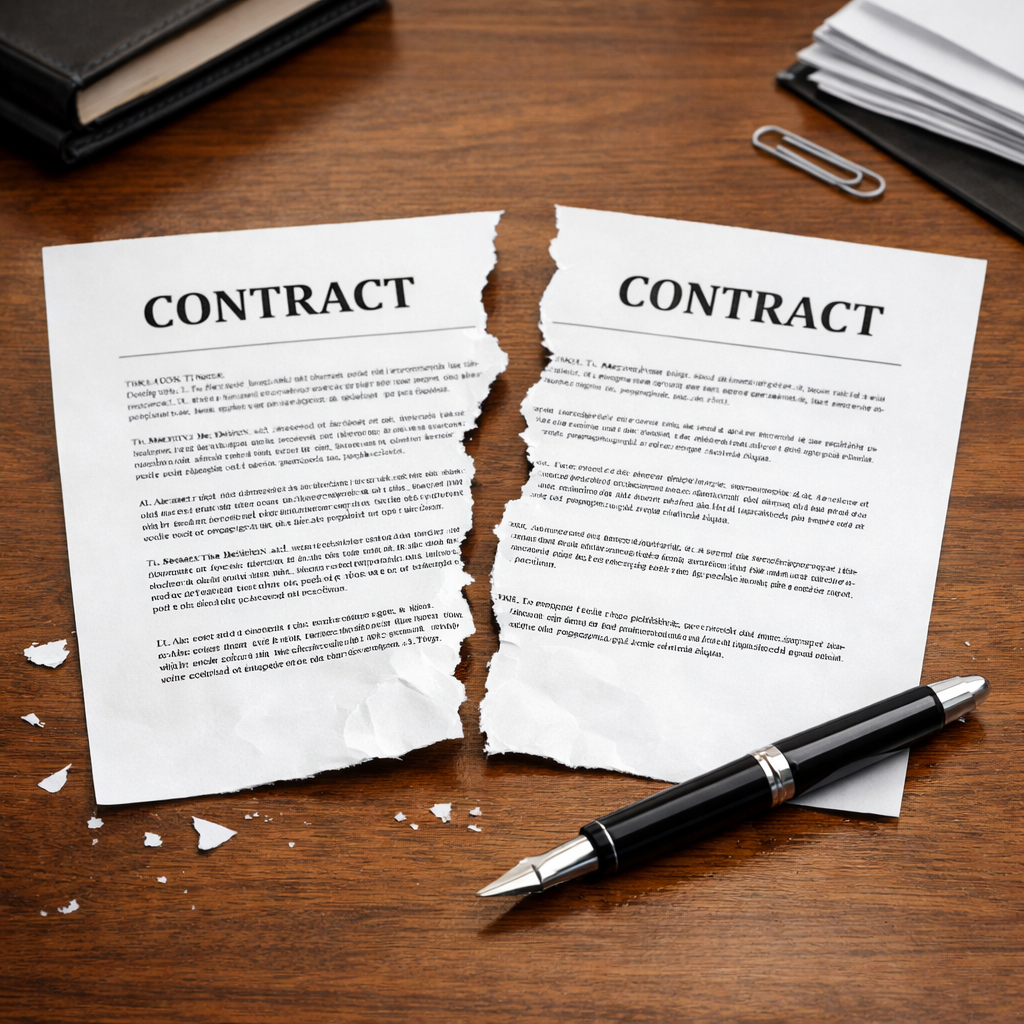
When the economy contracts, the margin for error disappears. A single missed payment or delayed delivery can ripple through a small business quickly.
Common recession-driven dispute triggers include:
- Late or partial payments from customers trying to preserve cash.
- Contract breaches when one party can’t meet pricing, volume, or delivery commitments.
- Disagreements over interpretation, like whether delays are “excusable” or penalties still apply.
- Sudden renegotiation requests that weren’t clearly addressed in the original contract.
Many small business contracts are written during stable times, assuming normal cash flow and cooperation. During a downturn, those assumptions break—and vague terms or missing clauses become pressure points.