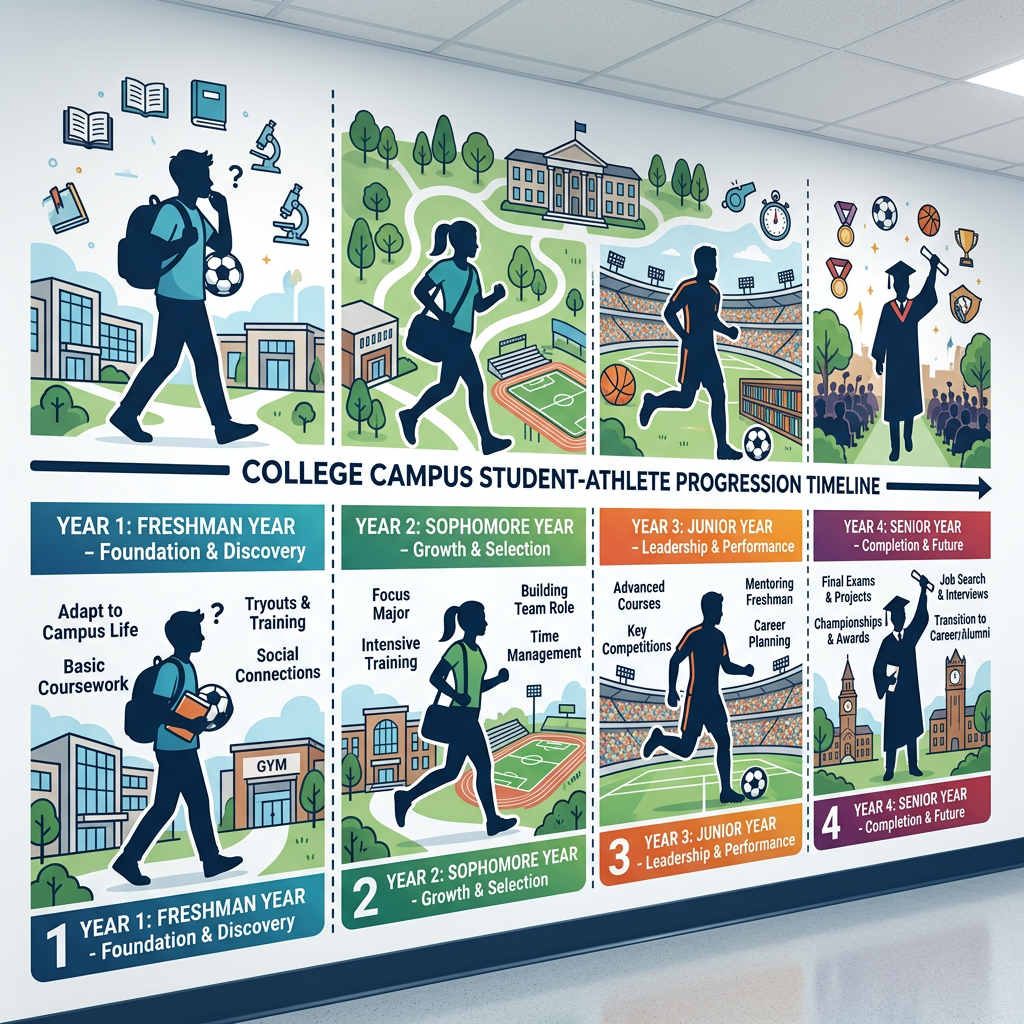
The NCAA is moving closer to adopting a major overhaul of Division I eligibility rules centered around an age-based model instead of the traditional “four seasons in five years” structure. A vote could happen as soon as next month.
Under the proposed system:
- Athletes would receive up to five full years of eligibility
- The eligibility clock would begin after either:
- high school graduation, or
- the athlete’s 19th birthday
- Redshirts and many waiver-based extensions would largely disappear.
The NCAA says the goal is to simplify what has become an increasingly chaotic eligibility system filled with:
- lawsuits
- transfer complications
- COVID-era extensions
- medical waivers
- repeated court challenges.
Important proposed exceptions would still remain for:
- religious missions
- military service
- pregnancy/maternity leave.
The proposal could significantly affect:
- older freshmen
- junior college transfers
- prep-school/reclassification strategies
- athletes seeking sixth or seventh years of eligibility.
The NCAA also indicated the changes would likely not be retroactive, meaning athletes whose eligibility expires during the 2025–26 academic year would not suddenly receive additional seasons.
The broader takeaway is that the NCAA is trying to create a cleaner, more enforceable eligibility structure as college athletics continues evolving under NIL, transfer portal expansion, and growing legal pressure.